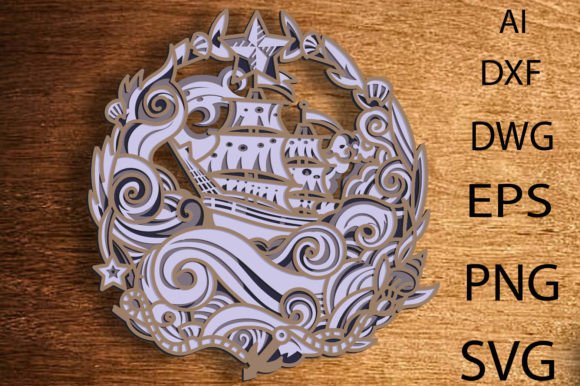
Pirate Ship with Mandala Sail and Floral Review
When I first opened the file for Pirate Ship with Mandala Sail and Floral, my immediate reaction was a mix of curiosity and caution. As someone who has spent years refining designs for real-world production, I know that a pretty image doesn't always translate to a clean stitch-out. This piece is unique because it blends a classic nautical theme with intricate mandala patterns and soft florals. It feels like a design meant for someone who wants to tell a story without being too literal about pirates and treasure.
The description notes that this vector design features four separate layers. In the world of embroidery, layering is everything. It suggests that this isn't just a flat image but a composition built to create depth. While the product is categorized under Other Home Decor and Laser Cutting, I am evaluating it strictly through the lens of machine embroidery. The question on my mind wasn't just "is it pretty?" but rather, "will this hold up on a customer's favorite sweatshirt or a delicate baby onesie?"
First Impressions: Mood and Visual Personality
The visual personality of Pirate Ship with Mandala Sail and Floral is sophisticated yet whimsical. The mandala sail immediately elevates the design from a cartoonish pirate motif to something more artistic and bohemian. This shift in mood is crucial for your target audience. If you are an Etsy seller targeting crafters who love cottagecore or boho-chic aesthetics, this design hits the mark perfectly. It avoids the cliché of skull-and-crossbones imagery, making it suitable for a wider range of ages and styles.
The floral elements add a touch of softness that balances the rigid lines of the ship's hull. From a design perspective, this creates a pleasing contrast between organic curves and structural geometry. However, this complexity requires careful planning. When I look at the layout, I see potential for beautiful texture, but I also see areas where stitch density could become an issue if not digitized correctly. The interplay between the detailed mandala and the flowing flowers suggests a high level of detail that needs to be respected during the stitching process.
Real-World Application: A Custom Tote Bag Scenario
To truly understand how this design performs, let's imagine a real project. You are preparing a batch of custom embroidered tote bags for a local craft fair. These bags will feature Pirate Ship with Mandala Sail and Floral as the centerpiece. The goal is to create a gift for family and friends, or perhaps a boutique product that stands out on a crowded table.
In this scenario, the four-layer structure becomes a significant advantage. You can use different thread colors for each layer to create dimension. For instance, using a deep navy for the ship's hull, a vibrant teal for the mandala sail, and soft pastels for the surrounding florals would make the design pop against a canvas background. The result is a finished product that looks expensive and professionally made, increasing customer trust and perceived value.
However, consider the fabric texture. Canvas is sturdy, but it can be thick. If the design includes dense fill stitches, you might need a heavy-duty stabilizer to prevent puckering. The mandala section, with its intricate details, requires precision. If the stitches are too close together, the fabric might bunch up, ruining the crispness of the pattern. On the other hand, if the stitch count is too low, the fine lines of the mandala might disappear into the weave of the fabric. This is why testing on scrap material is non-negotiable before running a full production run.
Where to Use (and Where to Think Twice)
This design shines in specific applications. It is excellent for home decor items like pillow covers, tea towels, or even a decorative wall hanging. The layered nature works beautifully when stitched onto wood or paper for laser cutting projects, but for embroidery, it excels on stable fabrics. A sweatshirt embroidery project could benefit from the bold statement this design makes, especially if paired with a simple font for a personalized name.
Conversely, there are situations where Pirate Ship with Mandala Sail and Floral should be used with extreme caution. Small hoop sizes are a major red flag here. The intricate details of the mandala sail require enough space to breathe. If you try to compress this design into a 4x4 hoop, the tiny details will likely merge, creating a muddy mess that customers won't appreciate. Similarly, stretchy fabrics like jersey or thin knits are risky. Without proper stabilization, the tension of the embroidery could distort the garment, leading to a poor finished product.
Dense stitch areas are another consideration. If the design calls for a high stitch count in a small area, it might cause the fabric to stiffen significantly. This is problematic for apparel that needs to drape naturally, such as a baby item or a fitted shirt. For these products, a lighter touch or a reduced stitch density might be necessary to maintain comfort and flexibility. Additionally, dark fabrics present a challenge; you must ensure there is sufficient contrast in the thread colors to make the floral and mandala details visible.
Stitch Clarity and Professionalism
The success of any embroidery project relies heavily on clarity. With Pirate Ship with Mandala Sail and Floral, the satin stitch used for outlines and the fill stitch for the main body must be balanced. If the fill stitch is too aggressive, it can obscure the delicate running stitches that define the floral shapes. This balance directly impacts the professionalism of your brand. A blurry or distorted design signals a lack of attention to detail, which can hurt sales in a competitive market like Etsy or craft fairs.
Customer engagement often starts with the visual appeal of the product. A well-executed version of this design looks like a labor of love. It shows that you care about the quality of the handmade product you are selling. When buyers see a clear, crisp mandala pattern on a tote bag or apron, they associate that quality with the reliability of your shop. This leads to repeat business and positive reviews, which are vital for growth.
Practical Designer Notes for Execution
Before you commit to producing this design, there are several technical steps you must take. First, always test the design on scrap fabric that matches your final project material. This allows you to check thread color contrast and see how the stitches interact with the fabric texture. If the design is intended for commercial embroidery, verify the licensing terms to ensure you have the right to sell finished items featuring this digital embroidery file.
Review the stitch density carefully. If the design feels too heavy, consider adjusting the settings or simplifying the fill areas slightly to improve the drape and feel of the final product. Confirm the hoop size requirements; if the design exceeds your machine's capabilities, you may need to split the file or choose a different project type. Inspect small details in black and white mockups to ensure they remain distinct regardless of the thread color chosen.
Finally, think about the end-user experience. Will the design wash well? Frequent washing can cause fraying in dense areas, so using high-quality thread and proper stabilizer is essential. Whether you are creating a personalized gift, a patch, or a piece of holiday embroidery, taking the time to perfect the setup ensures that Pirate Ship with Mandala Sail and Floral delivers the unique aesthetic it promises. By treating this design asset with respect and practical insight, you transform a simple vector file into a cherished, high-value handmade product.