Easter Watercolor Wreath: A Designer's Real-World Review
As someone who has spent years evaluating digital assets for real-world embroidery projects, I approach every new download with a mix of excitement and skepticism. The market is flooded with "ready-to-use" files, but few translate seamlessly from a screen to a stitched masterpiece. Recently, I examined the Easter Watercolor Wreath, a product listed under Illustrations and Graphics, specifically looking at its viability for commercial use in small business settings. My goal was not just to admire the aesthetic, but to determine if this design could hold up under the scrutiny of an embroidery machine and the expectations of paying customers.
The First Impression: Mood and Visual Personality
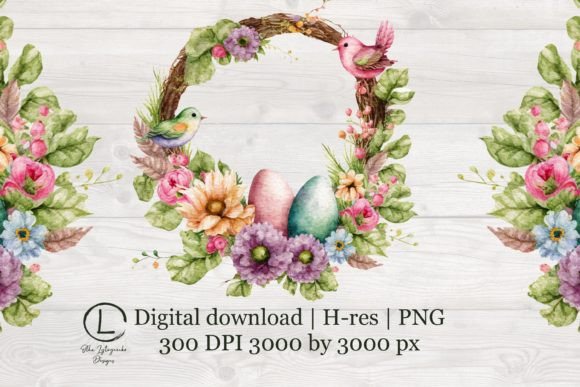
When you first open the high-resolution PNG file provided with the Easter Watercolor Wreath, the immediate takeaway is its soft, organic nature. Unlike rigid vector art often found in clipart collections, this piece captures the fluidity of watercolor paint. It feels less like a stiff logo and more like a delicate memory of spring. For a designer, this distinction is crucial because it dictates how the final embroidery project will feel to the touch and the eye.
The composition creates a welcoming, nostalgic mood that fits perfectly with the Easter theme without being overly cartoonish. The layout suggests a circular wreath form, which naturally draws the eye inward. This makes it an excellent candidate for central placement on apparel or home goods. However, as a reviewer, I must note that the watercolor style relies heavily on gradients and subtle color shifts. In the world of machine embroidery, these nuances are challenging to replicate. The design promises a "soft look," but achieving that through thread requires careful planning regarding thread colors and stitch techniques.
Real-Life Scenario: From Digital File to Finished Product
To truly test the potential of the Easter Watercolor Wreath, I imagined applying it to a specific scenario: creating a line of custom embroidered tote bags for a local boutique's Easter pop-up shop. The client wanted something that felt handmade and artisanal, not mass-produced. She envisioned a natural canvas bag adorned with a floral design that looked painted rather than stitched.
In this context, the Easter Watercolor Wreath shines. Its shape works beautifully on the front pocket of a tote bag or centered on a sweatshirt. If executed correctly, the design elevates the perceived value of the item. Customers browsing an Etsy listing would likely be drawn to the unique texture that mimics hand-painted art. It transforms a standard canvas tote into a personalized gift that feels special. The design's versatility extends beyond bags; it could easily adapt to a baby onesie for a spring shower, a pillow cover for a nursery, or even a kitchen towel for a holiday hostess gift.
However, the transition from a 300 DPI image to a physical object involves significant decisions. To achieve the watercolor effect, one cannot simply rely on basic satin stitches. The designer would need to incorporate fill stitch variations and perhaps use running stitch for softer edges to mimic the bleeding ink of the original illustration. This adds complexity to the digitizing process, requiring a skilled operator to ensure the final output retains the delicate personality of the source file.
Performance on Different Fabrics and Garments
The success of the Easter Watercolor Wreath depends heavily on the substrate. On stable, woven fabrics like cotton canvas or linen, the design performs exceptionally well. These materials provide the necessary foundation for the intricate details of the watercolor style to remain crisp. For custom apparel such as t-shirts or hoodies, the design adds a sophisticated touch that stands out against plain backgrounds.
Conversely, there are scenarios where caution is advised. Attempting to stitch this design on stretchy knit fabrics without proper stabilizer can lead to distortion, ruining the symmetry of the wreath. Similarly, textured fabrics like heavy wool or coarse burlap may obscure the finer details of the watercolor wash, making the design appear muddy rather than artistic. Dark fabrics present another challenge; while possible, they require a layer of white underlay or a light-colored base fabric to prevent the colors from appearing dull or lost in the darkness.
For curved surfaces like caps or fitted hats, the circular nature of the Easter Watercolor Wreath is advantageous, but the hoop size limitations must be respected. Small hoops on curved areas can cause puckering, especially if the design density is too high. Therefore, verifying the hoop size compatibility before committing to production is essential to maintain a professional finish.
Navigating Technical Challenges and Design Limitations
Every machine embroidery design has its constraints, and the Easter Watercolor Wreath is no exception. The primary limitation lies in the level of detail inherent in the watercolor aesthetic. Tiny corners or very fine lines might get lost during the stitching process, particularly if the design is scaled down too much. For products like embroidered patches or small accessories, the resolution of the original file might not support the necessary reduction without losing clarity.
Furthermore, the design's reliance on color blending means that thread selection is critical. Using a single shade of thread for a gradient area will result in a flat appearance, defeating the purpose of the watercolor style. Designers should consider using variegated threads or carefully selected color palettes to simulate the depth of the original graphic. Ignoring this aspect can lead to a finished product that looks cheap or unfinished, negatively impacting customer trust and brand consistency.
It is also important to address the file format. The product description mentions a high-resolution PNG file. While this is ideal for visual reference and printing mockups, it is not a native embroidery file (like .DST or .PES). This means the user must either find a pre-digitized version or hire a digitizer to convert the image into a stitch file. If the seller provides only the raster image, the buyer assumes the responsibility of digitization, which can be a hurdle for hobbyists or those unfamiliar with the technical side of commercial embroidery.
Practical Advice for Designers and Sellers
If you are considering adding the Easter Watercolor Wreath to your inventory or personal collection, here are some non-negotiable steps to ensure success. First, always test the design on scrap fabric that matches your intended final material. This allows you to check stitch density and see how the colors interact with the fabric texture before risking a saleable item.
Review the design in black and white mockups to ensure the contrast remains strong even without color. This helps identify areas where details might vanish. When preparing for production, use the appropriate stabilizer for your fabric type; floating designs on stretchy materials often require cut-away stabilizers to prevent shifting. Additionally, confirm the licensing terms explicitly. Just because you have a digital file does not automatically grant you the right to sell the finished physical items or distribute the digital asset itself. Always check the specific license included with the purchase.
Finally, manage your expectations regarding the "watercolor" look. While modern embroidery techniques can come close, they cannot perfectly replicate the fluidity of paint. Position the Easter Watercolor Wreath as an artistic interpretation rather than a photographic copy. By highlighting the handmade quality and the skill involved in translating the digital graphic into thread, you turn a potential limitation into a selling point.
Final Thoughts on Value and Versatility
In conclusion, the Easter Watercolor Wreath offers a beautiful, versatile option for designers looking to add a touch of spring elegance to their projects. Its strength lies in its ability to convey a soft, artistic mood that resonates well with holiday themes and boutique branding. Whether used for personalized gifts, craft business merchandise, or holiday embroidery collections, the design has the potential to elevate a simple product into a cherished keepsake.
However, its success is entirely dependent on the execution. Proper digitization, thoughtful thread selection, and rigorous testing on various fabrics are mandatory. For experienced designers and savvy Etsy sellers, this asset is a valuable addition to their library of design assets. For beginners, it serves as a reminder that beautiful graphics require technical precision to become beautiful products. When handled with care, the Easter Watercolor Wreath can be the centerpiece of a successful, profitable, and aesthetically pleasing embroidery line.