Watercolor Wild Flowers Embroidery Review
As a designer who has spent years stitching through everything from heavy canvas to delicate silk, I know that the difference between a good project and a great one often lies in the design file itself. When I first encountered Watercolor Wild Flowers, my initial reaction wasn't just about how pretty it looked on the screen, but how it would translate into physical thread. The product description highlights that this is a Graphic Template available as high-resolution PNG and JPG files, which immediately signaled to me that this asset was intended for digital use or perhaps as a reference for digitizing. However, many of us in the handmade community want to know if these visual assets can serve as the foundation for a real embroidery project.
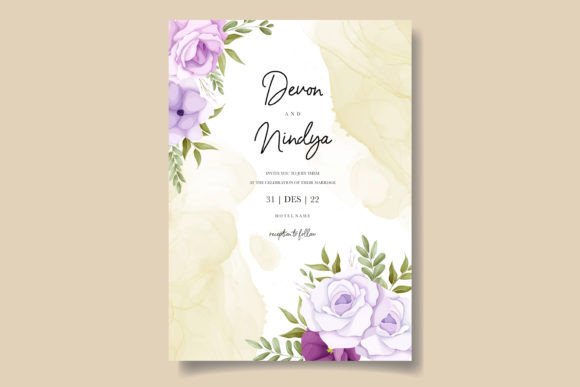
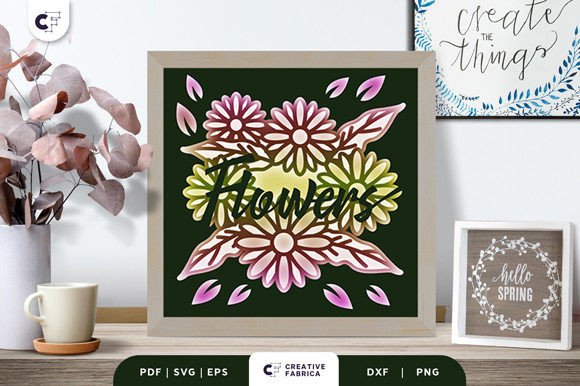
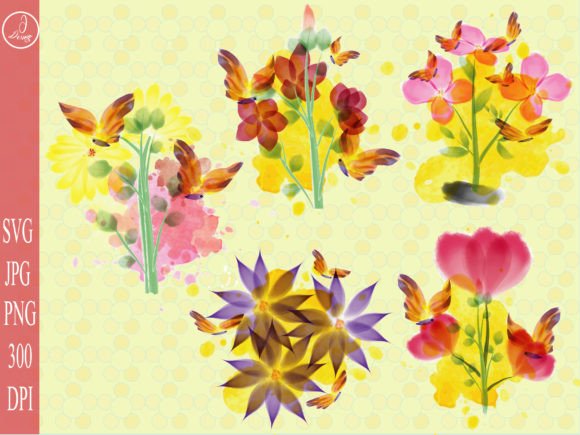
The mood created by Watercolor Wild Flowers is soft, organic, and distinctly artistic. Unlike rigid geometric patterns or standard vector icons, this design mimics the fluidity of hand-painted illustrations. It feels like something you would find in a boutique nursery or a cozy coffee shop. For an embroidery designer, this translates to a need for careful stitch selection. The watercolor aesthetic relies on gradients and bleeding edges, which can be challenging to replicate with traditional satin stitch or fill stitch. If executed poorly, the design could look blocky and lose its painterly charm. But when done right, it offers a level of sophistication that elevates any handmade product.
Real-World Application: From Screen to Stitch
To truly evaluate Watercolor Wild Flowers, I imagined a specific scenario: preparing a custom embroidered tote bag for a local artisan market. The goal was to create a limited run of bags for a small shop selling organic soaps and candles. The client wanted something that felt personal and unique, not mass-produced. This is where the visual personality of Watercolor Wild Flowers shines.
In this context, the design acts as a perfect centerpiece for a tote bag design. The loose, flowing nature of the wild flowers suggests movement, making it ideal for a large surface area like the front panel of a canvas tote. I considered using a light beige or cream fabric to let the colors pop, mimicking the white space of a watercolor paper. However, the challenge arises when we talk about the actual execution. Since the provided files are described as PNG File Resolution 300 Dpi and JPG File Resolution 300 D, they are raster images meant for printing or digital display, not direct machine embroidery files. This means a skilled digitizer would need to trace these graphics to create a true machine embroidery design.
If I were to proceed with this embroidery project, I would advise using a combination of running stitch for the delicate stems and petals to capture that sketch-like feel, paired with lighter fill stitches for the flower heads. The result would be a piece that feels tactile and luxurious. Customers browsing an Etsy listing for such a bag would immediately recognize the value. A well-executed Watercolor Wild Flowers motif signals attention to detail, boosting customer trust and allowing the seller to command a higher price point for their small shop product.
Navigating Technical Challenges and Fabric Choices
While the aesthetic appeal is undeniable, practical application requires a healthy dose of caution. Not every surface is suitable for a design with the complexity of Watercolor Wild Flowers. If you plan to use this concept for baby embroidery on a onesie, you must consider the fabric texture. Stretchy knits can distort fine details, causing the "watercolor" effect to blur into a muddy mess during washing.
Similarly, attempting this design on dark fabrics presents a significant hurdle. Watercolor art thrives on negative space and light backgrounds. To achieve this look on a black hoodie or a navy cap, you would need extensive underlay and potentially multiple layers of thread, which increases the risk of puckering. In these cases, the stitch density becomes a critical factor. Too much density, and the fabric will pucker; too little, and the design looks sparse and unfinished.
I also had to think about the limitations of hoop size. The intricate details of wild flowers require enough room to maneuver without crowding the stitches. On a curved surface like a baseball cap, the perspective shifts, and the delicate lines might get lost against the curvature. For custom apparel like sweatshirts or aprons, the flat surfaces offer more forgiveness, but the design needs to be scaled correctly. If the design is too small, the subtle variations in color that define the watercolor style will disappear, leaving only a generic floral shape. Therefore, checking the hoop size compatibility before committing to a production run is essential.
Impact on Branding and Product Value
For Etsy sellers and creative entrepreneurs, the choice of design directly influences brand consistency. Watercolor Wild Flowers fits perfectly into a brand identity focused on wellness, nature, femininity, or artisanal goods. It adds a layer of professionalism that separates a hobbyist's work from a commercial-grade product. When a customer receives a personalized gift featuring this motif, the emotional connection is stronger because the design feels curated rather than generic.
This is particularly important for holiday embroidery projects or wedding gifts. Imagine a set of embroidered kitchen towels featuring these wildflowers. The soft, romantic vibe makes them excellent personalized gifts for housewarmings or bridal showers. The design assets, specifically the high-resolution Graphics provided, allow for creating beautiful printable mockups to showcase the final product online before a single stitch is made. This helps in marketing the finished product effectively to potential buyers.
However, there are areas where this design should be used carefully. If you are creating an embroidered patch for outdoor gear, the durability of the watercolor style might be questioned. Patches need to withstand rough handling, and fine lines can snag easily. In such cases, simplifying the design into a bolder graphic might be a better route. Also, for products that need frequent washing, like aprons or kitchen towels, the stability of the threads is paramount. Ensuring proper stabilizer usage is non-negotiable here to prevent the design from warping over time.
Practical Notes for the Embroidery Designer
Before diving into production with Watercolor Wild Flowers, there are several steps every professional should take. First, always test the design on scrap fabric. This allows you to gauge how the thread colors interact with your chosen material and whether the stitch density creates unwanted bulk. Since the source files are described as PNG and JPG, you will likely need to convert these into a vector format or manually digitize them. During this process, inspect small details closely. The delicate tips of the petals and leaves are the first things to get lost if the resolution isn't handled correctly.
It is also wise to test the design in black and white mockups. This removes the distraction of color and lets you focus purely on the composition and line weight. Does the layout hold up? Is there enough balance between the positive and negative space? Furthermore, compare how the design looks on both light and dark fabric backgrounds. The watercolor effect might require different backing strategies depending on the base color.
Finally, confirm licensing terms before selling finished items. While the product is listed under Graphic Templates and Graphics, the rights to use these images for commercial embroidery vary. Ensure you have the permission to create derivative works, especially if you plan to sell the commercial embroidery pieces. Always use the proper stabilizer for your fabric type to ensure the longevity of the embroidery file once stitched. Whether you are a crafter looking for a fun weekend project or a digital product seller offering design assets, understanding the nuances of Watercolor Wild Flowers ensures that your final output is nothing short of exceptional.